

Why Lighter Cashmere Colors Feel Softer
Lighter cashmere colors, particularly ivory, cream, oatmeal, and light grey, often feel noticeably softer than darker shades like black, navy, or charcoal. The primary reason is dye chemistry: lighter colors require less processing, which means the natural fiber surface is preserved more completely. A secondary reason is fiber selection, as naturally white cashmere is among the finest and most carefully graded. This article explains both factors in detail, what they mean when you are choosing a cashmere scarf, wrap, or sweater, and whether dark cashmere is ever a sign of lower quality.
In this article
- Does dyeing affect how soft cashmere feels?
- Why is naturally white cashmere considered the finest?
- Do dark cashmere colors require more processing?
- Does color change how soft cashmere looks and feels?
- Light vs dark cashmere: a comparison
- Does dark cashmere mean lower quality?
- What should you look for when buying cashmere by color?
- Frequently asked questions
Does Dyeing Affect How Soft Cashmere Feels?
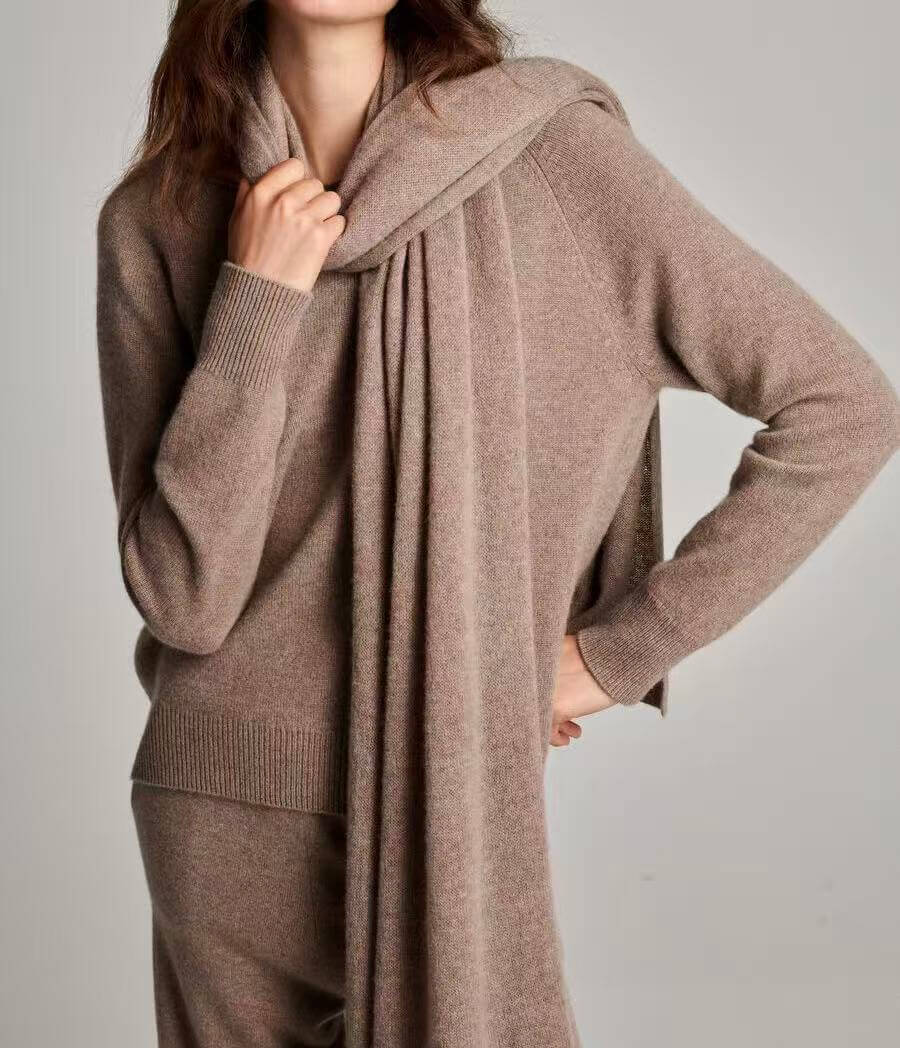
Yes, dyeing can affect cashmere softness, and the degree of processing is the main reason lighter colors often feel superior. Natural cashmere fibers grow in a range of undyed shades: white, cream, beige, light grey, and brown. When a cashmere product is made in one of those natural shades, or in a pale color close to them, the fiber requires minimal dye uptake and fewer chemical treatments to achieve the target color. Fewer treatments means the natural protein structure of the fiber, including the microscopic scales on its surface, stays intact. That intact surface is what creates the characteristic smooth, almost frictionless feel of premium cashmere against skin. Heavily dyed fibers can lose some of this surface texture, resulting in a slightly coarser or stiffer hand feel even when the underlying fiber quality is equivalent.
Why Is Naturally White Cashmere Considered the Finest?
Naturally white cashmere is the most prized and most expensive grade of cashmere fiber for two reasons. First, white fibers can be dyed into any color without color correction, which gives manufacturers maximum flexibility. Second, producers who sort and grade fibers carefully tend to reserve their finest, longest-staple, most uniform white fibers for top-grade production. The result is that undyed or minimally processed ivory and cream cashmere products are frequently made from the best fiber in a manufacturer's stock. These fibers measure at the finer end of the cashmere range, typically 14 to 16 microns, compared to 17 to 19 microns for standard grade. At that fineness, the fiber is definitively non-itchy and has the soft, almost weightless feel that cashmere is famous for.
Available in light naturals and deeper shades, all from the same premium-grade cashmere yarn. See the full color range.
Do Dark Cashmere Colors Require More Processing?
Yes. Achieving deep, saturated shades such as black, navy, forest green, or burgundy requires significantly more dye concentration, longer bath times, higher temperatures, and additional washing and finishing steps to remove excess dye and set the color. Each additional step is a potential stress point for the fiber. Modern dyeing technology has improved substantially, and top manufacturers use low-impact, fiber-safe dye processes, but the physical reality remains: a black cashmere fiber has been processed more than a cream one. Whether that processing produces a noticeable difference in softness depends largely on the manufacturer's technique, the quality of the dye chemicals used, and the grade of the underlying fiber. Inexpensive dark cashmere is more likely to feel stiffer than inexpensive light cashmere. At the top end of the market, the gap narrows considerably.
Does Color Change How Soft Cashmere Looks and Feels?
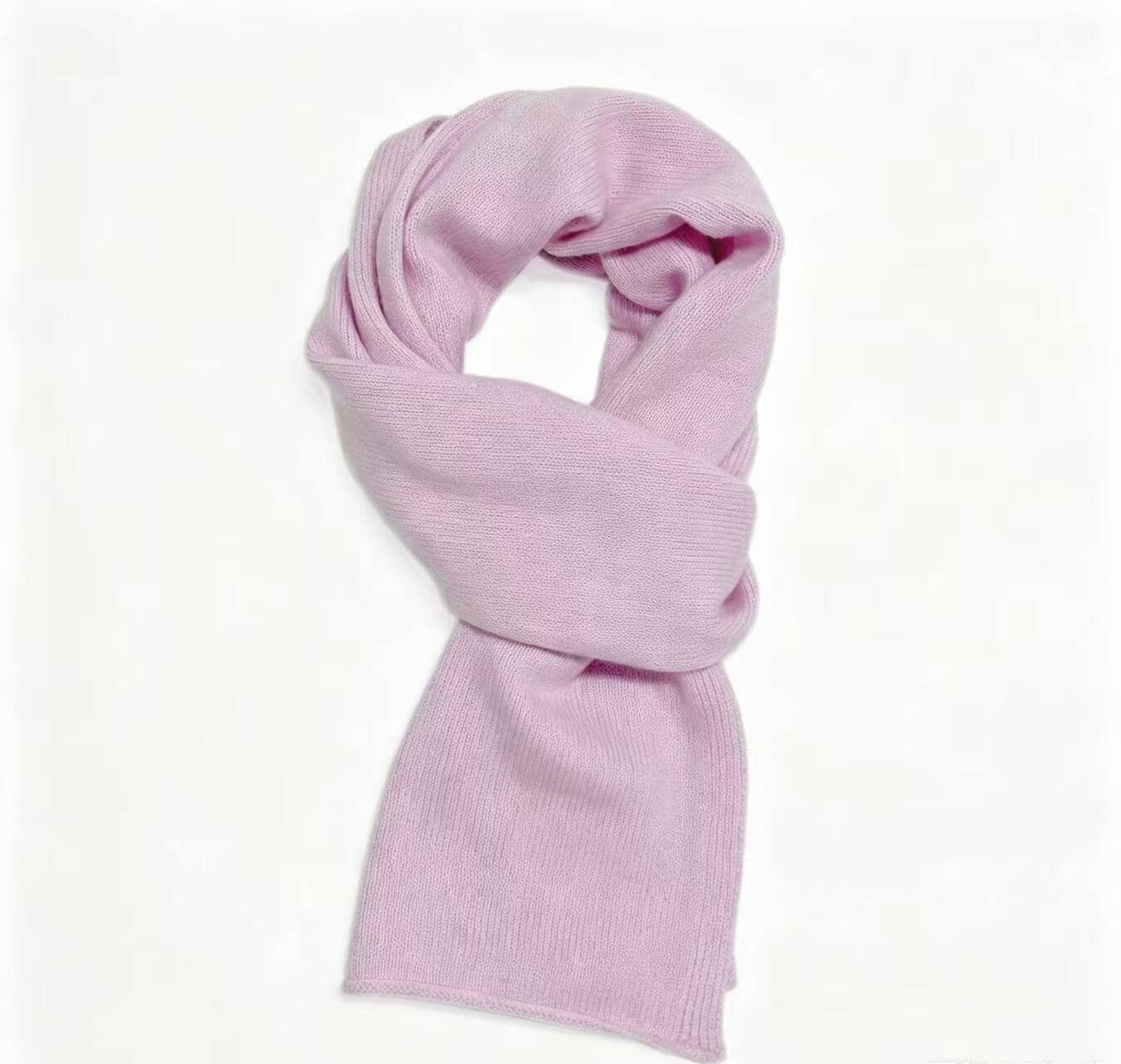
There is also a perceptual element. Cashmere's softness is partly tactile and partly visual. Lighter colors reflect more light and make the fiber's natural loft and fluffiness more visible. When you see an ivory or cream cashmere scarf, the visual information of a light, airy, voluminous texture activates an expectation of softness before you even touch it. Darker colors absorb more light and can make the same amount of fiber loft appear flatter and denser. This visual effect is real and documented in textile perception research: perceived softness is influenced by both touch and sight, and lighter-colored fabrics are consistently rated as softer in blind-then-sighted comparison studies, even when the fiber composition is identical.
Light vs Dark Cashmere: A Comparison
The table below summarises the key differences between light and dark cashmere across the factors that affect softness, feel, and long-term wear.
| Factor | Light colors (ivory, cream, oatmeal, light grey) | Dark colors (black, navy, charcoal, burgundy) |
|---|---|---|
| Dye processing required | Minimal to none | Intensive; higher dye load, longer bath times |
| Natural fiber surface preserved | More completely | Partially, depending on technique |
| Typical fiber grade used | Often finest white fiber (14 to 16 microns) | Variable; can be any grade |
| Perceived softness (visual + tactile) | Higher, enhanced by light reflection and visible loft | Slightly lower, darker tones absorb light |
| Color fastness concern | Low; less dye to fade | Higher; deep colors can transfer or fade |
| Versatility for styling | High; neutrals pair with almost everything | High; dark neutrals also very versatile |
| Quality indicator | Color alone does not guarantee quality | Color alone does not indicate lower quality |
Does Dark Cashmere Mean Lower Quality?
No. Dark cashmere color is not a reliable indicator of lower quality. A premium black cashmere scarf made from Grade A fiber, processed carefully with low-impact dyes, can be just as soft, warm, and durable as an ivory one. The difference in softness between light and dark cashmere, while real, is typically subtle and most noticeable when comparing pieces side by side from the same manufacturer. What matters far more than color when assessing cashmere quality is fiber fineness (measured in microns, with under 16 microns being excellent), staple length, yarn construction, and the overall finishing of the garment. A genuinely fine dark cashmere piece will feel markedly softer than a cheaper light one.
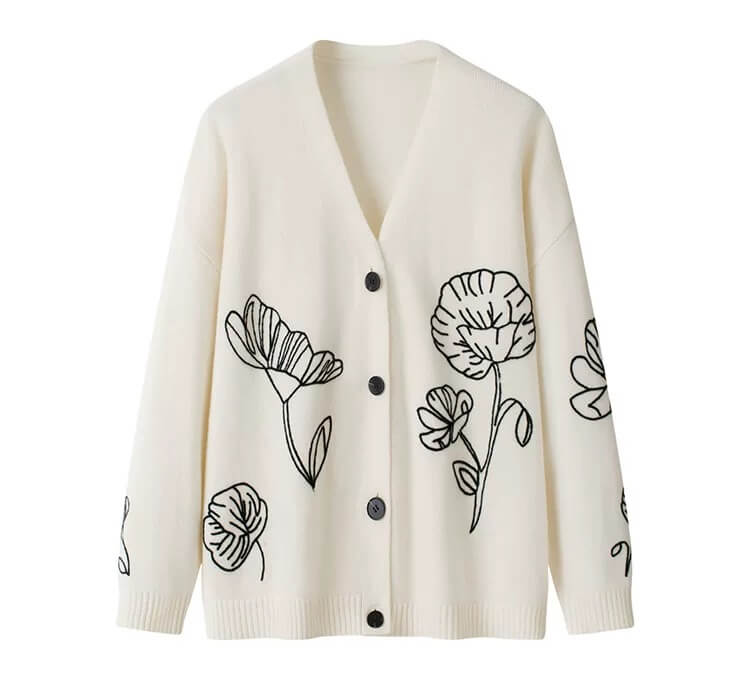
Available in both light naturals and deep shades, all from the same Grade A cashmere. Quality consistent across every color.
What Should You Look for When Buying Cashmere by Color?
When choosing a cashmere color, softness and quality should be assessed by the fiber specification, not the shade. Ask or look for the micron count if it is available; anything under 16 microns is excellent, 16 to 18 microns is very good, and anything above 19 microns begins to approach standard wool territory. Check the fiber composition label: 100% cashmere, not a blend. Feel the piece if possible; premium cashmere should feel smooth rather than scratchy and should have visible loft without being excessively fluffy. If you are buying online, check the brand's stated fiber grade and whether the color range uses the same yarn specification across shades. For light colors, the natural softness advantage is real. For dark colors at a reputable brand, the difference is minimal and the aesthetic versatility is worth it.
Explore Every Shade in 100% Pure Cashmere
From ivory and oatmeal to charcoal and navy, the full Vinci Cashmere collection uses the same Grade A fiber across every color.
Browse the Collection →Free shipping available. 100% pure cashmere, guaranteed.
Frequently Asked Questions
Why does light grey cashmere feel softer than black cashmere?
Light grey cashmere typically requires less dye processing than black cashmere. Black requires a high concentration of dye, longer processing times, and additional finishing steps to set the color. Each stage of that process can slightly affect the natural surface texture of the cashmere fiber, reducing the smooth, frictionless feel it has in its minimally processed state. Light grey, which is close to the natural undyed color of many cashmere fibers, undergoes far fewer of those steps, so more of the fiber's original softness is preserved.
Is undyed cashmere better than dyed cashmere?
Undyed cashmere is not inherently better, but it does preserve the fiber in its most natural state, which often results in the softest possible hand feel for a given fiber grade. Whether that makes it better depends on what you are looking for. If maximum softness and natural fiber characteristics matter most, undyed or minimally processed cashmere in cream, ivory, or oatmeal is the best choice. If you want a specific color, a well-made dyed cashmere piece from a quality manufacturer will still be exceptionally soft. The fiber grade underneath the dye matters more than the dyeing itself.
Why is white cashmere more expensive?
Naturally white cashmere fibers are rarer than brown or grey cashmere and are more versatile for manufacturers because they can be dyed into any color cleanly and consistently. This scarcity and versatility makes white fiber more sought-after at the raw material stage, which pushes the price up. Additionally, producers tend to reserve their finest, longest, most uniform fibers in white because those qualities are most visible and valuable in a fiber that will be processed into premium undyed or lightly dyed products. The combination of scarcity, versatility, and fine grading makes white cashmere the most expensive grade at the fiber level.
Does cashmere color affect warmth?
Color does not meaningfully affect the warmth of a cashmere garment. Warmth in cashmere comes from fiber fineness, yarn weight, knit density, and ply count, none of which are related to color. The idea that dark colors are warmer because they absorb more solar radiation is technically true in direct sunlight but irrelevant for garments worn in ordinary indoor and outdoor conditions. An ivory and a black cashmere scarf of the same weight, construction, and fiber grade will feel equally warm in practice.
What color cashmere looks most expensive?
Ivory, oatmeal, camel, and light taupe consistently read as the most luxurious and expensive cashmere shades, which is why luxury brands disproportionately feature them in editorial campaigns. These natural shades highlight the fiber's loft, drape, and texture in a way that saturated colors do not. That said, a deep charcoal or navy cashmere piece in a fine gauge knit has its own understated richness that also reads as premium. The most expensive-looking cashmere is less about color and more about the drape and weight of the fabric itself.
Does cashmere color fade over time?
Cashmere color can fade gradually over many washes, particularly in dark shades that carry a higher dye load. Black and navy cashmere are the most prone to gradual fading and to color transfer onto lighter fabrics, especially when new. To minimise fading, always wash cashmere in cool water (below 30 degrees Celsius), use a gentle detergent, turn the garment inside out before washing, and keep it out of direct sunlight during drying. Light-colored cashmere is less prone to noticeable fading but can yellow slightly over time if stored in humid conditions or near heat sources.