

How to Identify Real 100% Cashmere: The Ultimate Guide
Real 100% cashmere has a fiber diameter of 14 to 19 microns, which is finer than the finest merino wool and fine enough to be genuinely non-itchy against bare skin. It always states "100% cashmere" on the label, burns with the smell of singed hair rather than melting like a synthetic, pills lightly after early wear as a sign of genuine fine fiber, and feels buttery smooth rather than slippery or scratchy. This guide covers eight tests you can perform in-store or at home to verify whether a cashmere product is authentic before you buy it.
In this guide
- 1. The label test: what should it say?
- 2. The feel test: what does real cashmere feel like?
- 3. The burn test: the most reliable at-home test
- 4. The ring test: how fine is the fiber?
- 5. The micron standard: what fiber diameter is real cashmere?
- 6. The pilling test: does real cashmere pill?
- 7. The yarn test: what does genuine cashmere yarn look like?
- 8. The source test: where does authentic cashmere come from?
- Quick reference: real cashmere vs blends at a glance
- Frequently asked questions
1. The Label Test: What Should a Real Cashmere Label Say?
A genuine cashmere product will state "100% cashmere" on the care label or fiber content tag. No other phrasing is an acceptable substitute. Labels reading "cashmere blend," "cashmere-feel," "cashmere-touch," "contains cashmere," or "wool and cashmere" legally describe products that may contain as little as 7% actual cashmere fiber. These products feel meaningfully different from pure cashmere and wear out faster. The label must also list the country of fiber origin or country of manufacture depending on the market; reputable brands will state both. If a product is sold online without a clearly stated fiber composition of 100% cashmere, treat it as a blend until confirmed otherwise. The label check takes five seconds and is the single most reliable first filter when shopping.
2. The Feel Test: What Does Real Cashmere Feel Like?
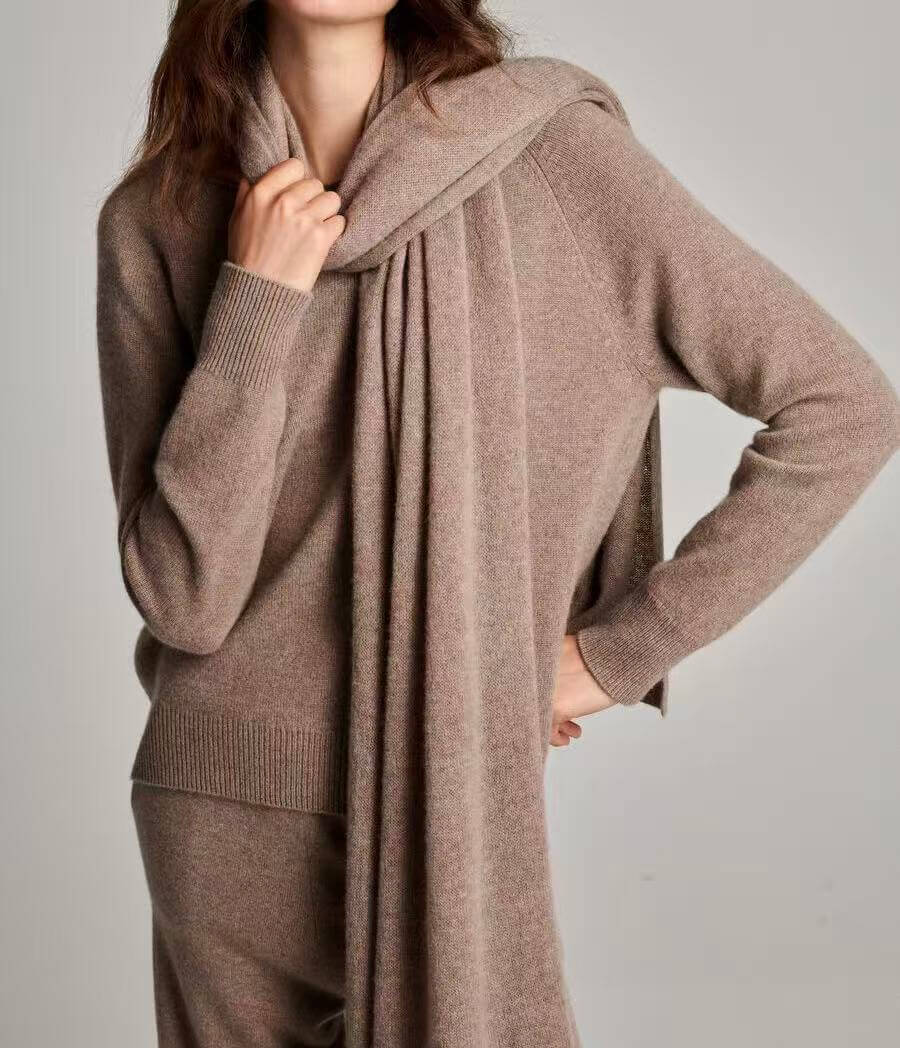
Real cashmere feels buttery smooth, lightweight, and genuinely soft against bare skin with no scratchiness or prickling. The sensation is distinct from wool, which can feel coarse against sensitive skin even at fine grades, and completely different from synthetic alternatives like acrylic, which feel either slippery or slightly rough depending on the weave. The smoothness of genuine cashmere comes from the fineness of the fiber at 14 to 19 microns in diameter; anything coarser than 19 microns begins to feel perceptibly scratchy against skin. A cashmere product should also have natural elasticity: gently stretch a section of the fabric and release it. Real cashmere springs back cleanly to its original shape. A blend with nylon or acrylic may feel briefly soft but will either feel faintly plastic-like, stay stretched after tension is released, or lose its surface softness after a few wears.
Grade A Mongolian cashmere. Featherlight, buttery smooth, and non-itchy against bare skin. The benchmark for what genuine pure cashmere feels like.
Shop Now →3. The Burn Test: The Most Reliable At-Home Test for Real Cashmere
The burn test is the most definitive way to distinguish genuine cashmere from synthetic blends at home. Pull a small number of loose fibers from an inconspicuous edge or seam of the garment, hold them with tweezers, and bring them close to a flame. Real cashmere, like all protein-based natural fibers, burns slowly and self-extinguishes when removed from the flame. The burning fibers produce a smell of singed hair, identical to burning wool or human hair, and leave behind a soft, crushable ash that crumbles between the fingers. Synthetic fibers, including acrylic, polyester, and nylon, behave completely differently: they melt rather than burn, produce a chemical or plastic smell, and leave behind a hard, fused bead of plastic residue that cannot be crushed. A blend will show a combination of both behaviors. If the fiber melts, smells chemical, or leaves a hard bead, the product contains synthetic fiber regardless of what the label says.
4. The Ring Test: How Fine Is the Cashmere Fiber?
The ring test is a traditional in-store test for fine cashmere and pashmina. Take a corner or edge of the scarf or shawl and attempt to pull it through a standard finger ring. Genuine high-grade cashmere that is woven at a fine gauge and light weight will pass through a ring with ease due to the fineness and softness of the fiber and the looseness of the weave. A heavily blended, coarser, or thicker piece will resist or bunch up before passing through. The ring test is more useful as a relative indicator of fineness than as a definitive authenticity test; a heavyweight pure cashmere piece may not pass through a small ring simply because of its thickness, while a very finely woven synthetic blend might pass. Use it alongside the burn test and label check rather than in isolation.
5. The Micron Standard: What Fiber Diameter Is Real Cashmere?
Cashmere is defined by fiber diameter. The international standard for cashmere, as established by the International Wool Textile Organisation (IWTO), requires fibers to measure 19 microns or finer in diameter to be classified as cashmere. In practice, premium-grade cashmere for luxury accessories ranges from 14 to 16 microns, which is among the finest natural fibers available anywhere. Standard commercial cashmere falls in the 16 to 19 micron range. Anything above 19 microns is technically classified as wool rather than cashmere, regardless of what the label says. Consumers cannot measure micron count at home without specialist equipment, but it provides important context when evaluating price: genuine sub-16-micron cashmere costs significantly more than coarser grades, and any product priced comparably to wool is almost certainly not fine cashmere regardless of the label.
6. The Pilling Test: Does Real Cashmere Pill?
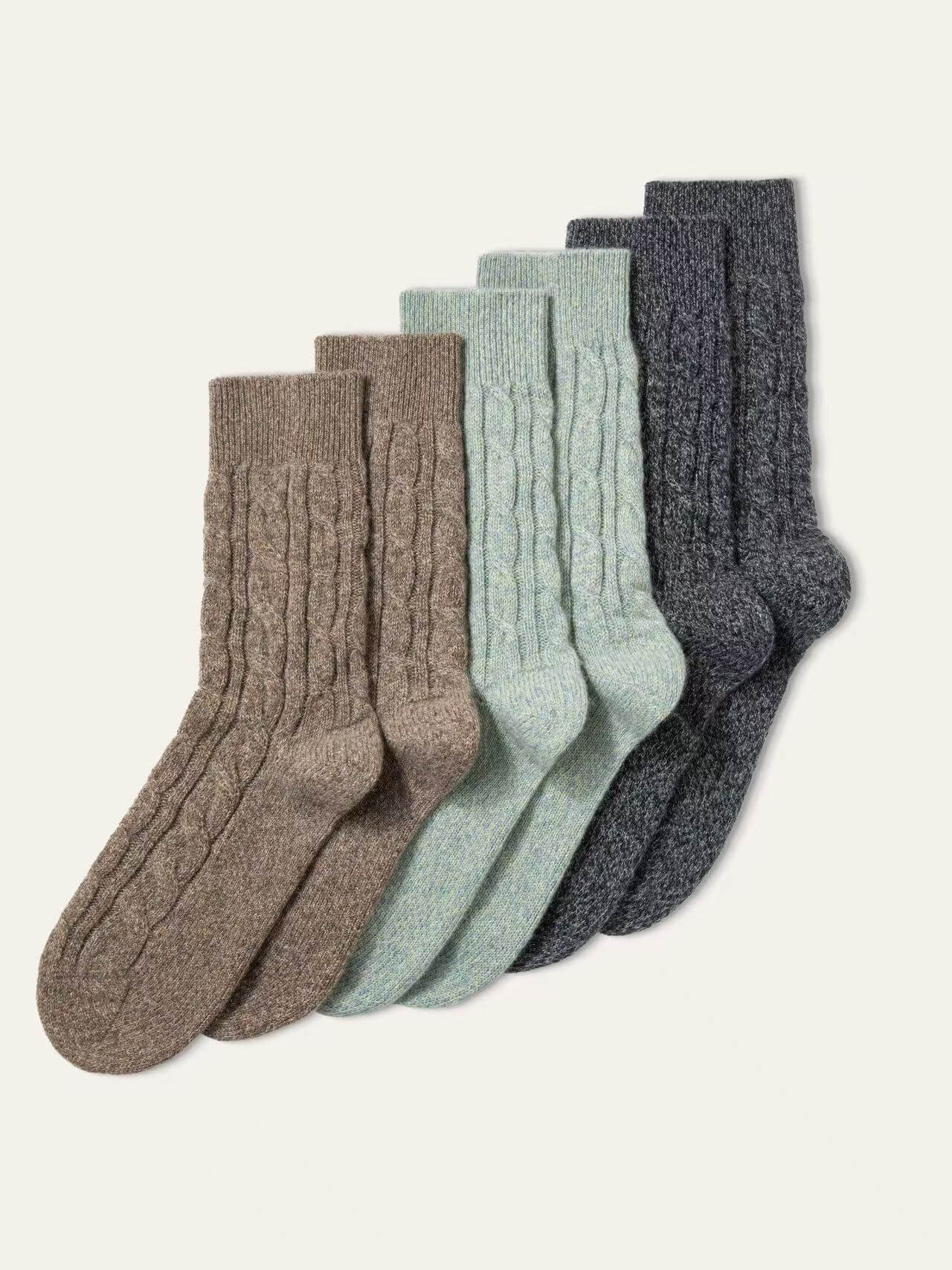
Yes, real cashmere does pill, and light pilling in the early weeks of wear is actually a sign of authenticity rather than poor quality. Pilling occurs when short fiber ends work loose from the yarn surface through friction and tangle into small balls. Genuine fine cashmere fibers are very fine and soft, which means they are more likely to produce surface fuzz in early wear than coarser fibers. The key difference between genuine cashmere and poor-quality blends is what happens next. Real cashmere pills lightly in the first few wears, then settles: the excess short fibers have worked loose, and the remaining long fibers produce a smoother surface after gentle washing. A cashmere comb removes the pills easily and the piece improves in feel over time. Cheap blends and low-grade cashmere pill aggressively, continuously, and do not improve with washing; the pilling is a symptom of short, weak fibers throughout the yarn rather than a surface phenomenon that resolves.
7. The Yarn Test: What Does Genuine Cashmere Yarn Look Like?
Hold the cashmere piece up to natural light and examine the surface closely. Genuine cashmere has a fine, even yarn with a soft, matte sheen. The individual fibers are too fine to see individually, which creates a smooth, consistent surface texture. Low-quality blends or cashmere made from short, coarse fibers show visible unevenness in the yarn: thick and thin patches, protruding fiber ends even before washing, an excessively fluffy surface on a new piece, or a shiny, synthetic-looking sheen that reads as plastic rather than natural fiber. A shiny appearance in cashmere is almost always a sign of synthetic content. True cashmere has a quiet, natural luster, not a high gloss. If the surface looks excessively fluffy before any wear, the yarn likely contains short-staple fibers that will pill aggressively within days.
8. The Source Test: Where Does Authentic Cashmere Come From?
The finest cashmere in the world comes from the fine undercoat of the Capra hircus goat, raised at high altitude in Mongolia, Inner Mongolia (China), and the Himalayan plateau. The extreme temperature range in these regions, from intensely cold winters to warm summers, drives the growth of particularly long, fine, and resilient undercoat fibers. Each animal produces only around 150 grams of usable cashmere fiber per year, which is harvested by combing once annually. Mongolia and Inner Mongolia together account for the majority of the world's premium cashmere fiber supply. Products that state Mongolian or Inner Mongolian fiber origin, or that work directly with herders in these regions, are signaling genuine sourcing rather than generic marketing. Vinci Cashmere sources Grade A fiber directly from Mongolian herders, with no blends and full fiber transparency on every product.
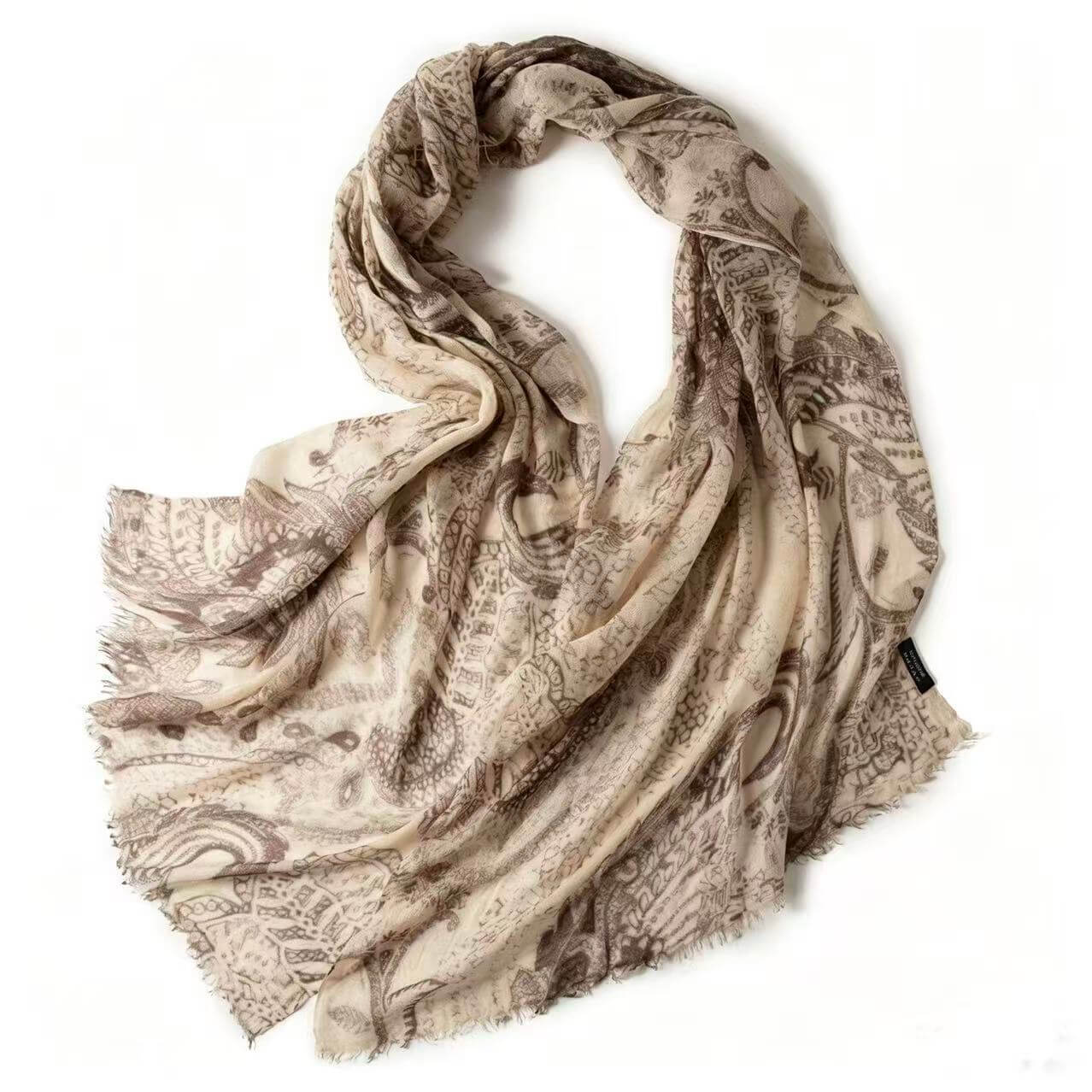
100% Grade A Mongolian cashmere with hand-twisted fringe. Full fiber transparency, no blends. The standard for authentic cashmere.
Shop Now →Quick Reference: Real Cashmere vs Blends at a Glance
The table below summarises all eight tests and the expected result for genuine 100% cashmere versus blended or synthetic alternatives.
| Test | Real 100% cashmere | Blend or synthetic |
|---|---|---|
| Label | States "100% cashmere" exactly | "Cashmere blend", "cashmere-feel", "contains cashmere" |
| Feel | Buttery smooth, lightweight, non-scratchy, springs back | Slippery, scratchy, stiff, or stays stretched |
| Burn test | Burns slowly, smells of singed hair, crushable ash | Melts, smells chemical or plastic, hard bead residue |
| Ring test | Fine-gauge piece passes through a ring easily | Bunches or resists at the ring |
| Fiber diameter | 14 to 19 microns (premium: 14 to 16) | Above 19 microns; classified as wool, not cashmere |
| Pilling | Light surface pills early, then settles and improves | Heavy pilling continuously; does not improve |
| Yarn appearance | Fine, even, matte-sheen surface; quiet natural luster | Uneven, shiny/synthetic sheen, or excessively fluffy |
| Origin | Mongolia, Inner Mongolia, or Himalayan plateau stated | No origin stated, or vague regional claim |
Shop 100% Verified Pure Cashmere
Grade A Mongolian cashmere. Full fiber transparency on every product. No blends, no fillers.
Browse the Collection →Free shipping available. Every piece 100% pure cashmere, guaranteed.
Frequently Asked Questions
How can you tell if cashmere is real without a burn test?
Without a burn test, the most reliable indicators of real cashmere are the label, the feel, and the price. The label must state "100% cashmere" exactly. The feel should be buttery smooth and non-scratchy with no plastic or slippery quality. The price should reflect the genuine scarcity of cashmere fiber: a pure cashmere scarf priced similarly to a wool scarf is almost certainly a blend. Yarn evenness is also a useful visual indicator: genuine cashmere has a fine, consistent surface with a quiet natural luster rather than a high synthetic sheen.
Does real cashmere pill?
Yes, real cashmere pills lightly in the early weeks of wear, and this is a sign of authentic fine fiber rather than poor quality. The fine protein fibers that make cashmere soft also make them susceptible to surface fuzz when rubbed against other fabrics. The pilling is a surface phenomenon: after the excess short fiber ends work loose in the first few wears and washes, genuine cashmere settles into a smoother surface and improves in feel over time. Use a cashmere comb to remove pills between wears. Continuous, heavy pilling that does not resolve is a sign of short-staple or blended fiber, not genuine premium cashmere.
What is the difference between cashmere and pashmina?
Pashmina is a term for fine cashmere or cashmere-blend fabric traditionally associated with the Himalayan region, particularly Kashmir and Nepal. Genuine pashmina is made from the fine undercoat of the Changthangi goat and is technically a type of cashmere, measuring around 12 to 16 microns in diameter. However, the term pashmina is not legally regulated in most markets, which means it is frequently used to describe cashmere blends, silk-cashmere blends, or synthetic products with no cashmere content at all. When in doubt, look for "100% cashmere" on the label rather than relying on the word pashmina as a quality indicator.
Why does cheap cashmere feel soft in the shop but scratchy after washing?
Many low-grade cashmere blends are treated with a silicone or softening finish during manufacturing that temporarily masks the coarseness of the underlying fiber. This finish makes the product feel deceptively soft in a shop or when new, but it washes out after one or two gentle washes, revealing the true fiber quality underneath. Genuine high-grade cashmere does not rely on a chemical finish for its softness; the softness comes from the fineness of the fiber itself at 14 to 19 microns and improves rather than diminishes after washing. If a cashmere product feels noticeably harsher after its first wash, the initial softness was a finish treatment, not a fiber property.
Is cashmere from China real cashmere?
Yes. Inner Mongolia, which is an autonomous region of China, produces a significant proportion of the world's finest cashmere fiber. The cashmere goats raised on the Mongolian plateau, including on both the Mongolian and Chinese sides of the border, live in conditions that produce long, fine, high-quality fiber. The country of manufacture is separate from the fiber origin: a cashmere product made in China may use Inner Mongolian fiber of excellent quality, or it may use cheaper blended fiber. The key is the fiber composition label, which must state 100% cashmere, and the stated fiber origin, which should reference Mongolia or Inner Mongolia for premium-grade material.
What is the cheapest price for real 100% cashmere?
Genuine 100% pure cashmere scarves and accessories typically start at around $90 to $120 USD at the lower end of the legitimate market for fine-gauge pieces. Below that price threshold, the product is almost certainly a cashmere blend rather than pure cashmere, regardless of what the label claims. The scarcity of cashmere fiber, with each goat producing only around 150 grams of usable fiber per year, combined with the manual sorting, de-hairing, and spinning process, sets a genuine floor on what pure cashmere can cost to produce and sell. Price alone is not sufficient to verify quality, but it is a reliable filter: if a price looks too good for pure cashmere, it is not pure cashmere.